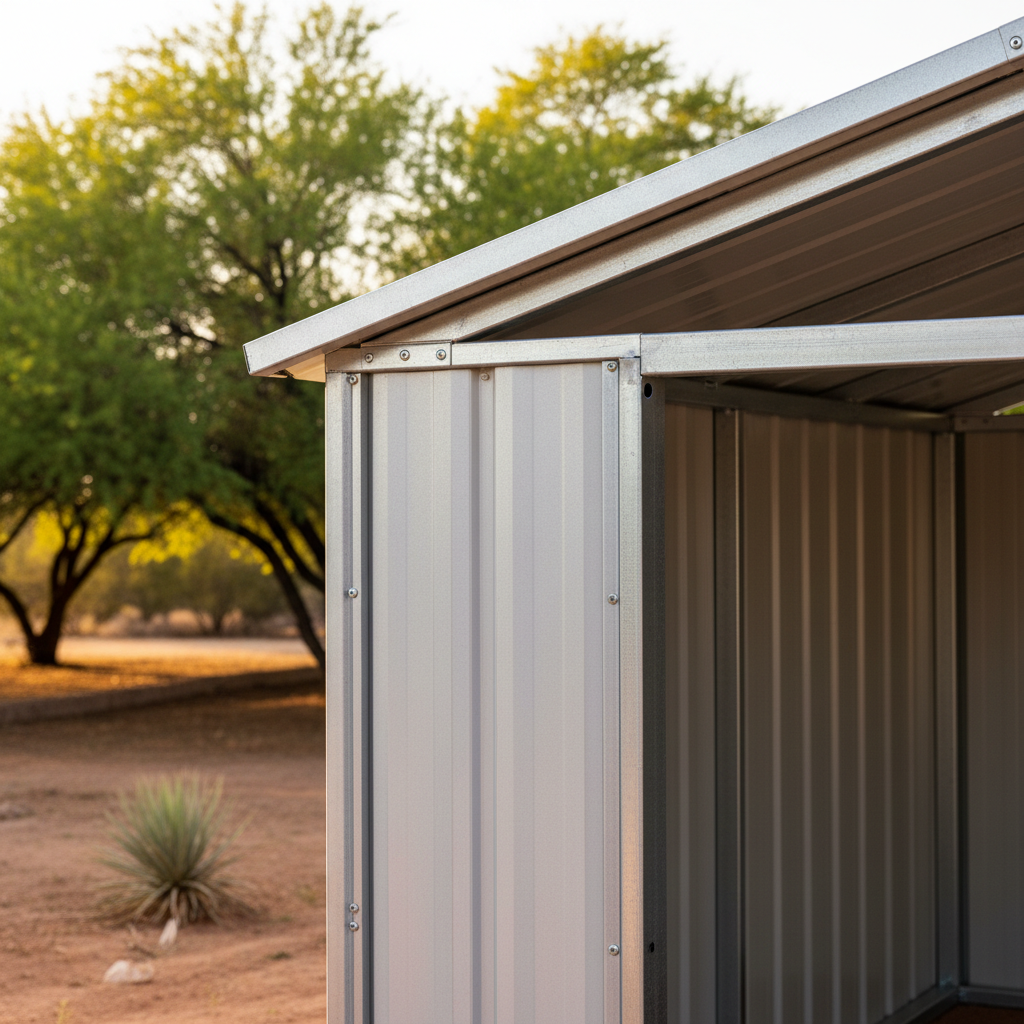
Can a metal shed really stand up to Avondale's heat and dust?
You bet it can. This is one of the first things people ask me, and it's a fair question, honestly. Our Avondale summers are brutal, and the dust storms? Well, they're legendary. But modern metal sheds, especially the ones we build at Avondale Metal Buildings, are designed for this kind of abuse. We're talking about galvanized steel, usually with a baked-on enamel finish. That finish isn't just for looks; it's a tough barrier against UV rays that would fade and crack wood, and it just shrugs off that abrasive dust. Unlike wood, metal won't warp, rot, or get eaten by termites, which are a real problem out here in the desert. You'll find these sheds hold up incredibly well, often looking good for decades with minimal fuss.
Do I need a concrete slab for my metal shed, or can I just put it on the ground?
Look, you *could* put a small, lightweight shed directly on the ground if you're just storing a few gardening tools and don't care much about how long it lasts or how stable it is. But if you want your shed to last, to stay square, and to keep your stuff dry and secure, a concrete slab is almost always the way to go. Especially here in Avondale, with our expansive clay soils, you'll see movement and settling if you don't have a solid foundation. A concrete slab gives you a level, stable base that anchors the shed, stops moisture from wicking up from the ground, and keeps pests out. It's an extra cost upfront, sure, but it saves you headaches and potential repairs down the line. Think of it as investing in the shed's future.
What about condensation? Will my tools rust inside a metal shed?
That's a smart question, and it's a legitimate concern with any uninsulated metal structure, especially when our desert nights cool down after a hot day. The good news is, there are several ways to tackle condensation. First off, proper ventilation is key. Things like ridge vents, gable vents, or even just strategically placed windows can create airflow and help equalize the temperature inside and out. Secondly, you can add a vapor barrier or insulation to the roof and walls. A simple radiant barrier under the roof sheeting can make a huge difference in preventing that 'sweating' effect. For more sensitive items, a fully insulated shed with a small dehumidifier might be your best bet. We always discuss these options with clients to make sure their shed meets their specific needs, whether it's for lawnmowers or delicate woodworking tools.
Are metal sheds noisy when it rains or during wind storms?
They can be, yes, especially if they're not built right or if they're very lightly constructed. A cheap, thin-gauge metal shed will definitely be louder in a downpour than a more robust one. The sound of rain hitting a metal roof is something some people find relaxing, others find annoying. During our monsoon storms, the wind can really howl, and if panels aren't securely fastened, you'll hear rattling. A well-built metal shed, with heavier gauge steel and properly fastened panels, will be much quieter. Adding insulation also helps dampen sound significantly. So, if noise is a concern, invest in a quality build and consider insulation.
How long does it take to get a metal shed installed?
That really depends on the size and complexity of the shed, and whether you're doing a DIY kit or having it professionally installed. If you're going with a kit, a small shed might be a weekend project for a couple of handy people. But for anything substantial, or if you're not experienced with construction, it can take much longer and lead to frustration. When you hire us at Avondale Metal Buildings, once the foundation is ready and permits are in place, a typical backyard shed (say, 10x12 or 12x20) can often be put up in just a few days. Larger structures, or those with more custom features, will naturally take a bit longer. The biggest variable is often the groundwork and getting the site ready, not the actual assembly of the metal components.
Can I customize a metal shed to match my home's look?
Absolutely. This isn't the old days where every metal shed looked like a corrugated tin box. Today, you've got a ton of options. There are different panel profiles, from classic R-panel to more architectural standing seam. You can choose from a wide range of colors for the walls and roof – many manufacturers offer colors that mimic traditional roofing or siding, so you can pick something that complements your house. You can add windows, walk-through doors, roll-up doors, overhangs, and even wainscoting. We've even done sheds that incorporate stucco or stone accents on the lower walls to really tie them into a home's aesthetic. You're not stuck with a one-size-fits-all solution anymore; these can be quite attractive and add value to your property.
Are metal sheds difficult to get permits for in Avondale?
Permitting is always a question mark for homeowners, no matter what you're building. For sheds in Avondale, it generally depends on the size and height. Small, pre-fabricated sheds below a certain square footage (often 120 sq ft, but always check current city codes!) might not require a full building permit, but they might still need to meet setback requirements from property lines. Anything larger, or if it involves electrical or plumbing, will definitely need a permit. It's not usually 'difficult,' but it requires submitting plans, getting inspections, and following the rules. My advice? Don't skip the permit process. It protects you, ensures the structure is safe, and avoids headaches if you ever sell your home. We can help you navigate the local Avondale permitting process, or at least point you in the right direction.